
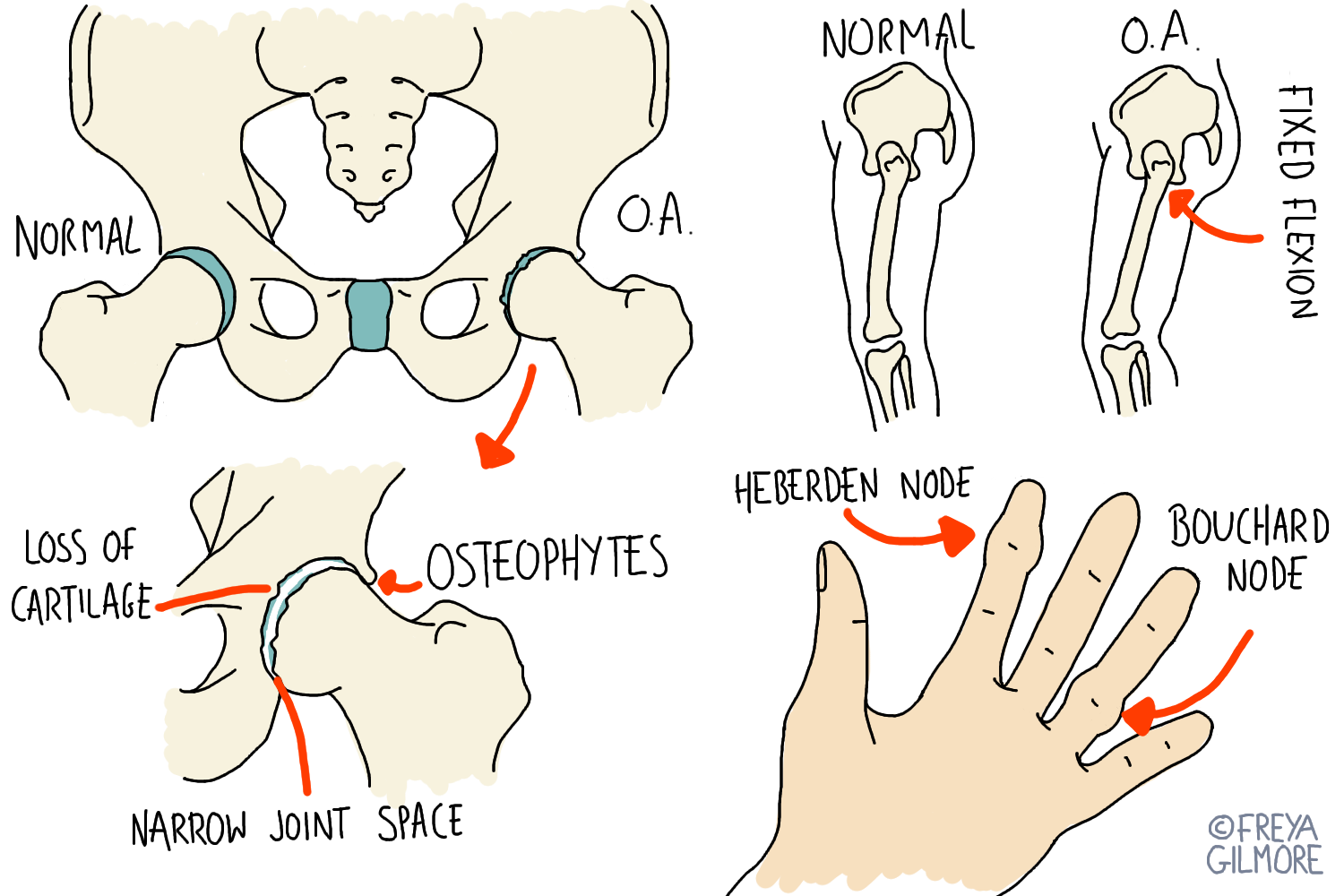
Osteoarthritis (or simply “arthritis” or OA) is a common joint problem. It is the “wear and tear” form of arthritis. This is in contrast to inflammatory types like rheumatoid arthritis. Unfortunately, a lot of people who suffer from OA are under the impression that there is nothing that can be done for it. Worse still, some are told that their joints are vulnerable to further damage, so limit their activity. In fact, the best thing you can do for arthritis is keep it moving.
What is Arthritis?
Most joints have a layer of cartilage on both joint surfaces. Between them there is fluid that is encapsulated within the joint. If the cartilage becomes unhappy, it can become rough, leading to discomfort and further loss of movement. In the later stages, cartilage can flake off, and cysts form between cartilage and bone. At this point, injections or joint replacements are likely the best way to manage symptoms. However, in the early stages the cartilage can respond well to manual therapies.
The Vicious Cycle
In situations like this, the body wants to protect itself. Recognising that some movement is uncomfortable, the body tightens up muscles to stop movement from going into that range. Unfortunately, this is exactly the opposite of what needs to be done. This process can happen insidiously in the hip: the muscles on the front of the hip tighten up and stop the leg from moving backwards as much as it used to. The rest of the body has to compensate for this change, which can lead to other areas of tightness elsewhere. This secondary restriction can cause other joints to become arthritic.
As the tight muscles restrict the joint movement, the arthritis can get worse. The cycle continues unless something changes.
Movement for Arthritis
Cartilage behaves like a sponge, taking its nutrients from the fluid within the joint. If it is squeezed and released, as with normal joint movement, it releases its waste easier and allows more room to take in the nutrients. This is still the case in early arthritis.
Later stage OA may still benefit from movement, although results may be limited. Where a joint replacement is needed, you may find that therapies can help to keep you comfortable in the interim. We may also be able to advise with rehabilitation where appropriate.
Osteopathy and Arthritis
 Your osteopath has two aims with treatment: to improve movement within the joint and release the muscles that are adding to its stiffness. This can be achieved in the treatment room, but also in the exercises you are given. Management is long term, so the more progress you can make at home, the less often you will need treatment. You can expect hands-on treatment to massage and stretch the muscles, and to articulate the joints.
The osteopath will also look at your body as a whole to see if there have been any compensatory changes elsewhere that need correcting before they become symptomatic.


